

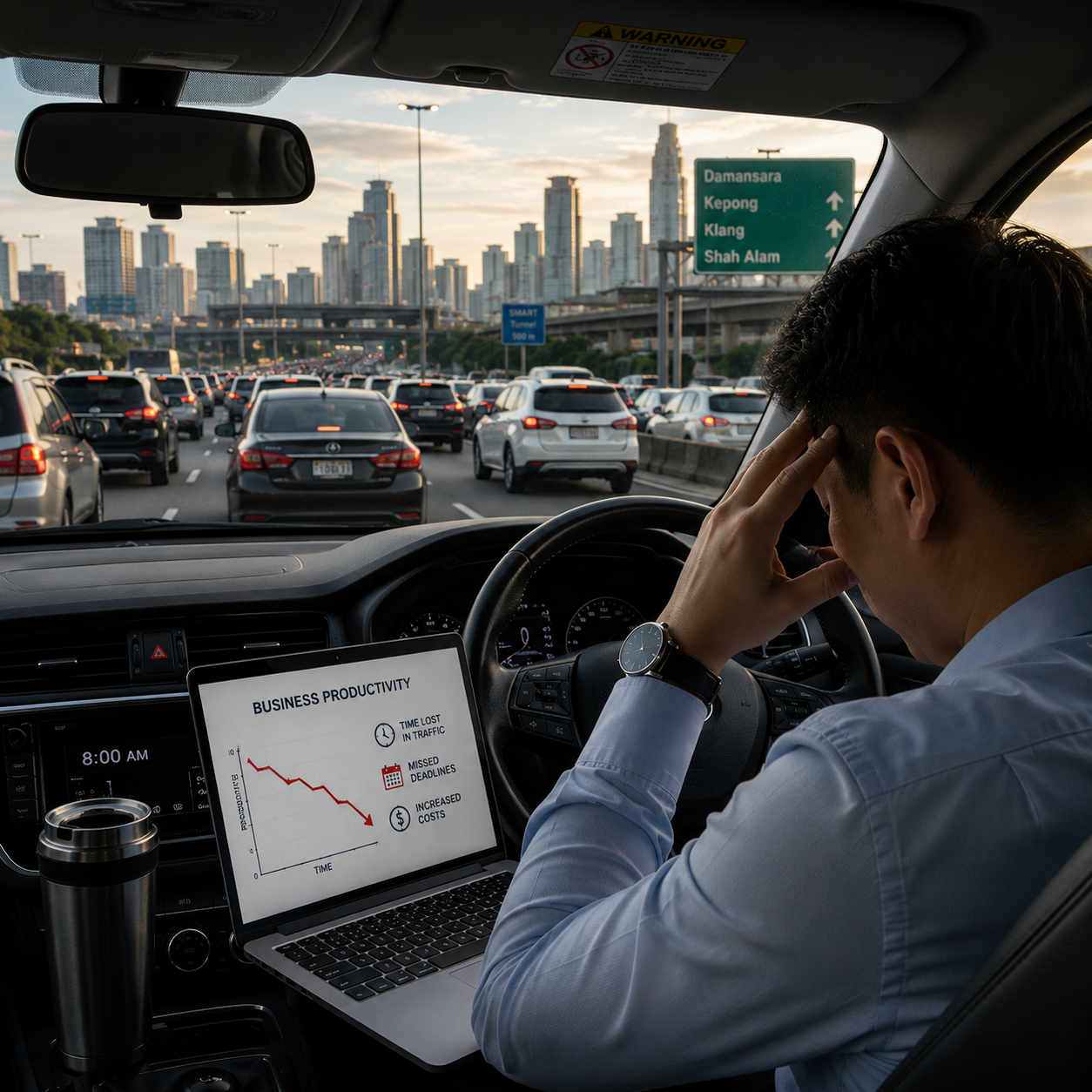
If you live and work in the Klang Valley, your morning routine likely involves a familiar, frustrating ritual: opening a navigation app, staring at a sea of crimson lines across the Federal Highway, LDP, or SPRINT, and bracing yourself for the slow crawl.
While traffic gridlock has long been dismissed as a mere “local inconvenience” or an unavoidable quirk of urban life, recent data paints a much grimmer reality. The worsening congestion across Kuala Lumpur and Selangor is no longer just a commuter headache—it has evolved into a full-blown economic crisis that is quietly eroding business productivity.
According to global traffic indexes, the average congestion level in KL has spiked significantly well past pre-pandemic numbers, with travel times on major corridors increasing by up to 50% (The Vibes). For businesses trying to remain agile in a competitive market, the gridlock comes with a heavy price tag.
Here is exactly how the Klang Valley traffic crisis is impacting corporate productivity, human capital, and the bottom line.
1. The “Hidden Time Tax” and Billions in Economic Loss
When employees are stuck in bumper-to-bumper traffic, their time is effectively being drained without any economic output. Occupational safety and health experts refer to this as a “hidden time tax”—a massive operational leak that never shows up on a corporate balance sheet but directly impacts execution.
- The Math Behind the Loss: Industry experts estimate that the average Klang Valley worker loses approximately 528 hours a year just sitting in traffic.
- The Cost Per Worker: Based on average hourly productivity values, this translates to an astonishing economic loss of up to RM21,250 per worker annually (Sinar Daily).
When scaled across an entire organization or a workforce of a million urban commuters, companies are losing thousands of hours of high-value momentum to tarmac gridlock every single year.
2. “Urban Fatigue” and Forced Presenteeism
Productivity isn’t just about being physically present; it’s about mental clarity and cognitive energy. The psychological toll of navigating chaotic morning traffic drastically lowers employee performance before they even type their first email.
To beat the worst of the bottlenecks, many workers are forced to leave their homes as early as 6:30 AM for a job that starts at 8:30 AM. This results in “urban fatigue”—a chronic state of exhaustion caused by sleep deprivation and road stress.
The Presenteeism Trap: Employers frequently battle forced presenteeism, a phenomenon where workers show up at their desks on time but function at sub-optimal levels. Drained by erratic motorist behavior, long queues at toll plazas, and unexpected delays, employees spend their peak morning hours recovering from their commute rather than focusing on strategic tasks.
3. Disrupted Supply Chains and Fragmented Client Relations
The impact of Klang Valley congestion isn’t restricted to office-bound knowledge workers. It deeply affects B2B operations, logistics, and client service management.
With arterial routes constantly funneling traffic into overcapacity bottlenecks, predicting delivery times or arrival windows for physical meetings has become a gamble.
- Delayed Decision-Making: Key stakeholder meetings are frequently pushed back or cut short due to transit delays.
- Logistical Friction: Heavy freight and supply chain deliveries face unpredictable delays, leading to missed windows, higher fuel wastage, and increased transport operational costs.
When a sales team spends three hours on the road to attend a 45-minute client pitch in Bangsar or Damansara, the cost-of-acquisition skyrockets, while the time left for actual strategic execution plummets.
4. The Rising Threat to Talent Retention
In the modern corporate landscape, employee well-being and flexible working conditions are major factors in talent retention. High-performing professionals are increasingly valuing their time over static office prestige.
If a company insists on rigid, centralized office hours that force a painful daily commute, they risk losing top-tier talent to forward-thinking competitors. Chronic back pain, reduced personal time, and deteriorating work-life balance are prompting workers to jump ship toward organizations that offer smarter, localized, or flexible working alternatives.
How Smart Businesses Are Fighting Back
The structural reality of Malaysia’s high car ownership rate means that the gridlock won’t vanish overnight (Straits Times). To protect their bottom line, agile businesses are actively rewriting their operational playbooks through practical interventions:
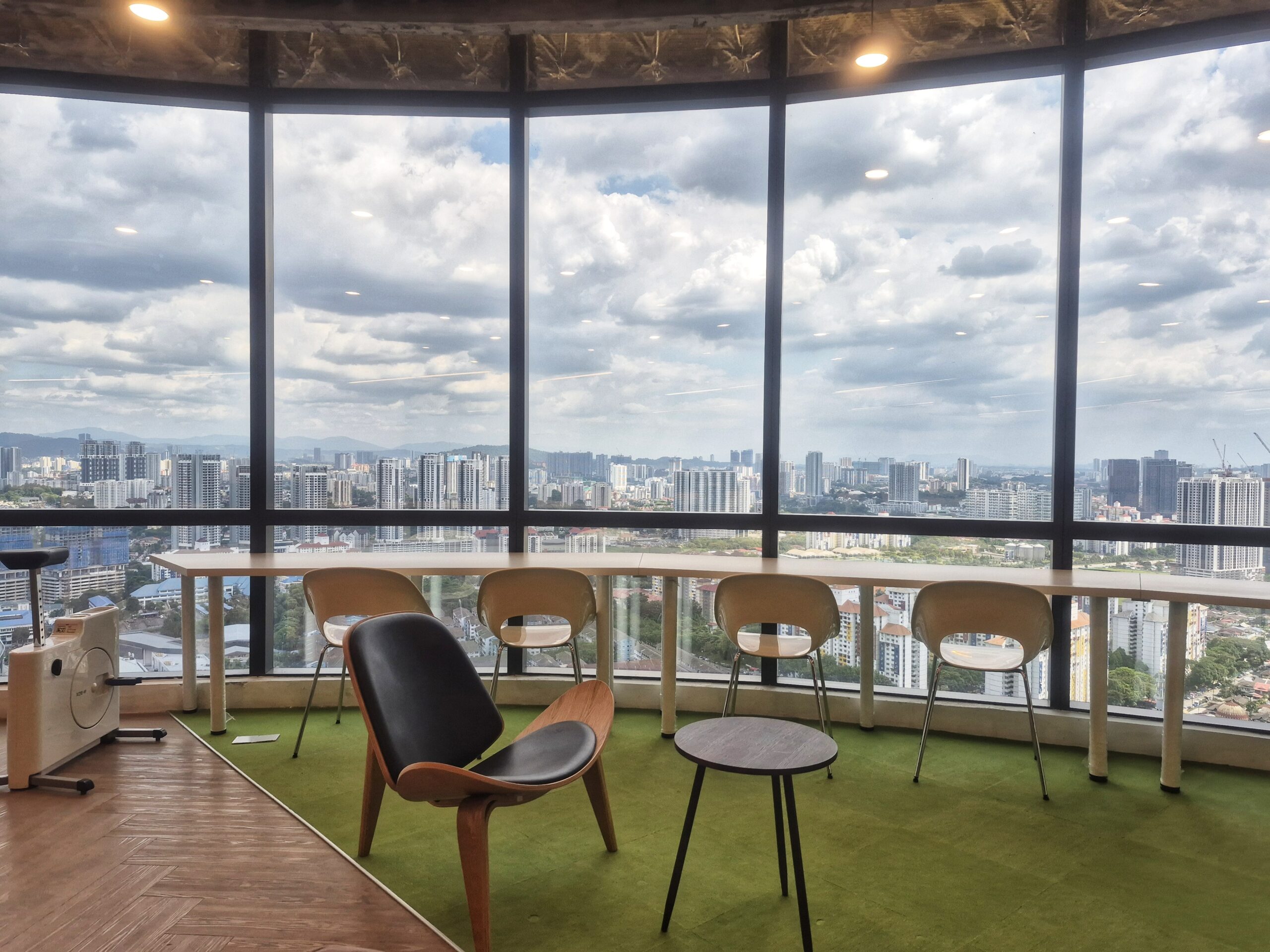
- Decentralized “Hub-and-Spoke” Offices: Instead of forcing the entire workforce into one central headquarters, companies are utilizing flexible, professional workspace networks closer to where their employees actually live (like setting up regional team pockets in PJ, Cheras, or Subang).
- Staggered Hours & Hybrid Windows: Allowing teams to commute outside peak windows (e.g., 10:00 AM to 4:00 PM) instantly rescues hours of wasted time and preserves mental energy.
- Prioritizing Transit-Oriented Locations: Shifting meeting points or workspace setups to hubs with direct, seamless pedestrian access to MRT and LRT lines eliminates the unpredictability of road travel entirely.
The Bottom Line
Klang Valley traffic is no longer just an infrastructure issue; it is a core business challenge. The companies that recognize this “hidden time tax” and actively adapt by offering geographical flexibility will preserve their team’s energy, retain top talent, and ultimately out-pace the competition.
Sources & Reference Insights
- Economic & Hourly Loss Metrics: Sinar Daily Industry Report (January 2026) – Data and expert analysis by UiTM on the RM21,250 annual productivity loss per worker and the concept of “urban fatigue.”
- Congestion Growth & Urban Planning Friction: The Vibes Malaysia (April 2026) – Insights on the 30% to 50% increase in travel times along major corridors like the LDP and uncoordinated urban bottlenecks.
- Vehicle Ownership & Public Transit Caps: The Straits Times (February 2026) – Analysis of TomTom Traffic Index data showing KL’s congestion climbing to 43.4% and the implications of overcapacity road networks.